Icons for Connoisseurs - Thirty Years of the BMW M1
Munich. The star came in pure white: When the 64th Paris Motor Show
opened its gates in autumn 1978, sports car fans and lovers had only
one destination - the stand of BMW Motorsport GmbH. There they were
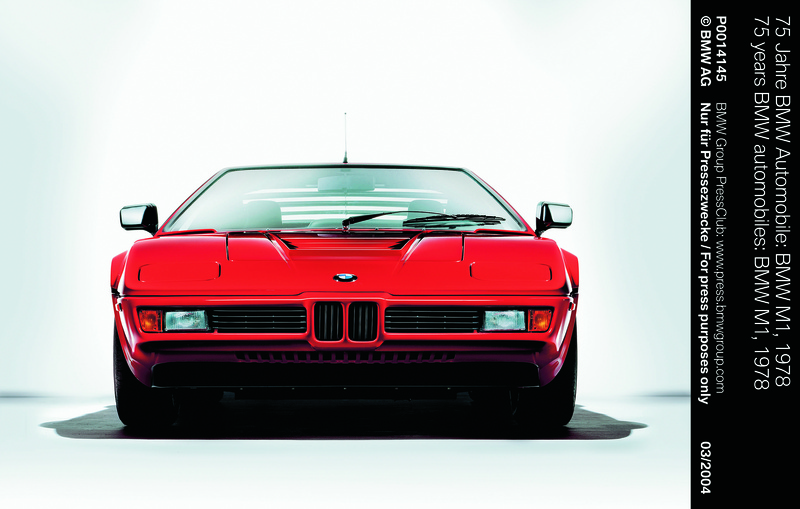
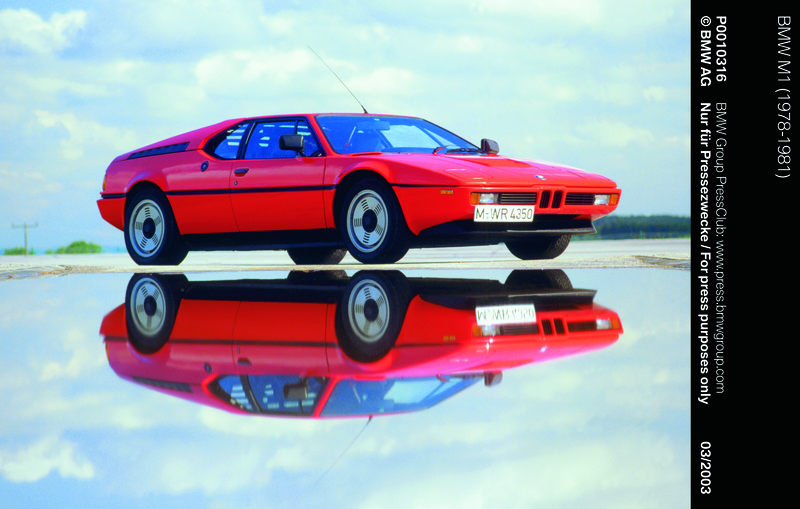
able to admire a super-low, extremely dynamic new model making it quite
clear at very first sight that this was Germany's fastest road-going
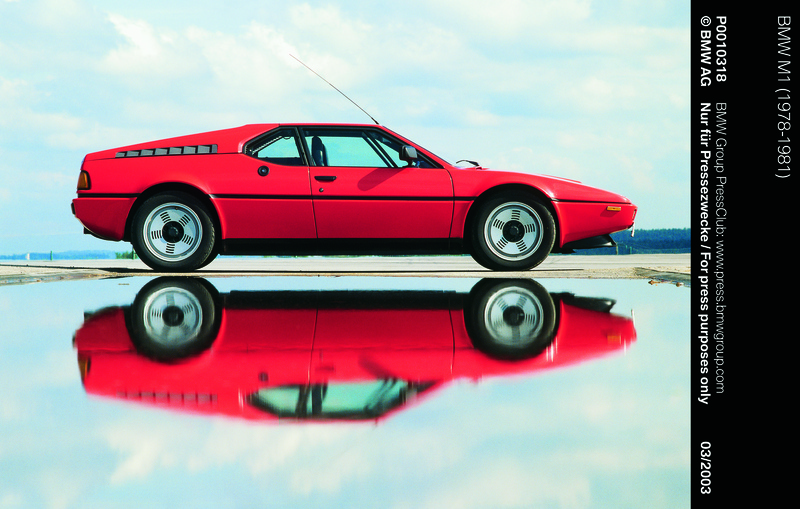
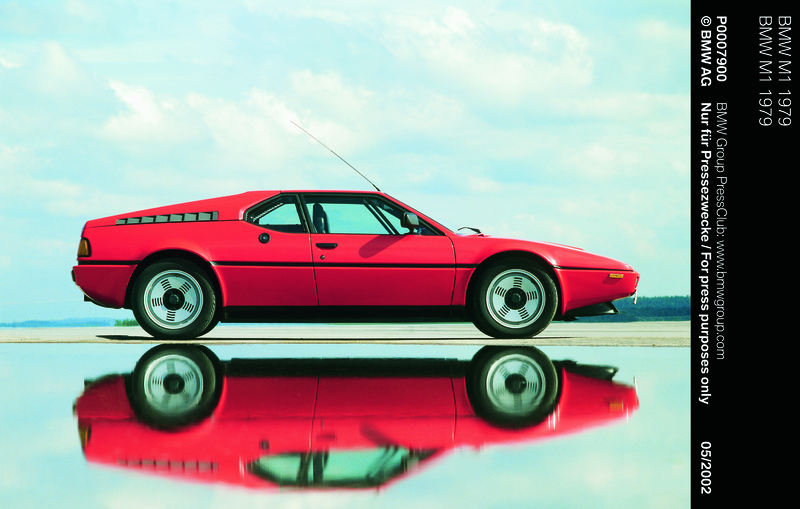
sports car: the BMW M1, 1,140 millimetres (44.9'' ) high, 204 kW (277
bhp) strong, and well over 260 km/h (160 mph) fast. "Everybody was
crowding around BMW's new mid-engined sports car", wrote the
press. And: "The list of orders coming in exceeds even the wildest
expectations - an American fan of BMW, just to mention one example, has
already put in an order for three M1s." That was indeed quite
something, considering that BMW's super-sports car had a price-tag back
then in 1978 of exactly DM 100,000, enough for four BMW 323is plus a
couple of optional extras. It is indeed fair to say that few cars have
ever been expected with such excitement and anticipation as the BMW M1
representing all of BMW's know-how in motor racing. Project E 26, as
the then still nameless M1 was initially called within the Company, had
started in 1976. This was to be the first really unique car built by
BMW Motorsport GmbH, BMW's motor racing subsidiary established in 1972.
Having already made a great name for itself in the international racing
scene with the fast BMW 2002 and the truly superior BMW 3.0 CSI, the
racing company now planned to lift this success to an even higher level
with a competition car specially built and prepared for the Group four
and five racing series. According to Group four regulations at the
time, a car qualifying for entry required a production run of at least
400 units in 24 successive months, it had to have two seats and bear a
distinct resemblance from outside with its production counterpart. And
that made it quite clear that the E26 h ad to be not only a
thoroughbred racing car, but also a street-legal sports car. A
Bavarian with Italian blood. The problem was that BMW Motorsport GmbH
totally lacked the capacity to develop and build such a car all by
itself. After all, this team of specialists had concentrated so far on
"simply" turning series-production cars into racing cars,
making the chassis and suspension tauter and the engine more powerful.
In its lines and design, the new coupé was intended to clearly
boast that special Italian style. It was modelled around the gull-wing
turbo, a turbocharged concept car created in 1972 by BMW designer Paul
Bracq. Proceeding from this design study with its rounder lines,
Giorgio Giugiaro created the sharp profile of the M1 with its distinct,
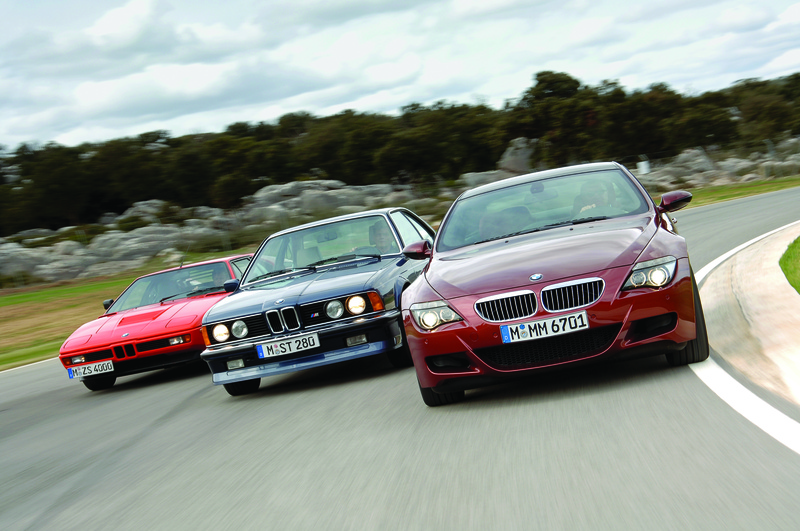
almost jagged edges and corners. Indeed, Bracq and Giugiaro had already
cooperated in the past in creating the BMW 6 Series coupé.
First choice in the engine department: a straight-six power unit.
Choosing the engine, BMW Motorsport GmbH initially focused on two
concepts: Advance studies of Formula engines had led, inter alia, to a
ten-cylinder code-named the M81, a V-engine with its cylinders at an
angle of 144°. Suitably modified, this engine was also examined for
its possible use in a sports car. But then the team around BMW's
Motorsport Director Jochen Neerpasch quickly opted in favour of a new
straight-six, an engine concept supported by the excellent experience
BMW had gained in the CSI races. After all kinds of rumours with the
grapevine running wild, BMW unveiled the secret in spring 1977,
officially confirming the development of the new super-sports car. Then,
in autumn of the same year, BMW published the first photos of the M1 in
production trim, the car then making its first public appearance again
half a year later: Together with TV presenter Dieter Kürten,
Jochen Neerpasch proudly introduced the Group four version in the
colours of Motorsport GmbH in a prime-time Saturday evening sports
programme on Channel Two of German Television. And although this racing
machine bearing starter number eleven was not yet ready to go, the
first test drives were scheduled for April 1978. 277 bhp in a purebred
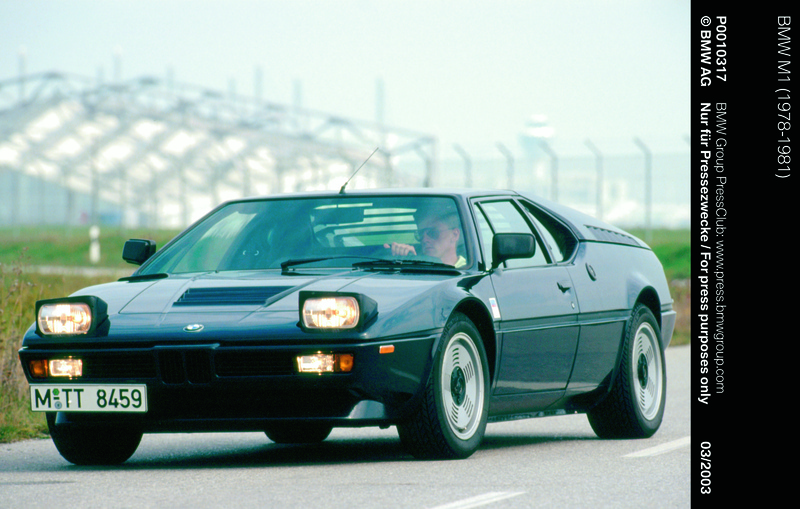
sports car. The big day finally came in autumn of the same year, the
public being able to admire the first E26 at the Paris Motor Show. By
that time the car bore the model designation M1 standing for the first
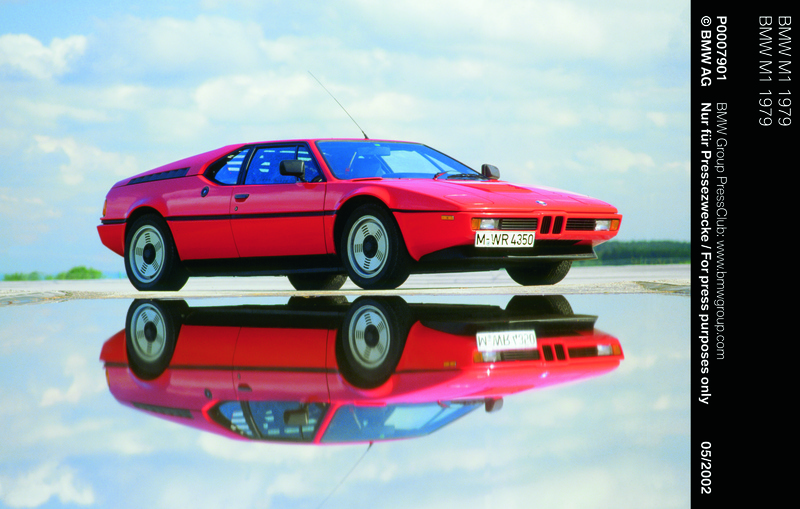
car developed and built by BMW Motorsport GmbH. Measuring 4,360
millimetres (171.7'' ) in length, 1,824 millimetres (71.8'' ) in width
and 1,140 millimetres (44.9'' ) in "height", the M1 exuded a
genuine flair of power. And indeed, this mid-engined sports car was
driven by a 3.5-litre straight-six fitted lengthwise in front of the
rear axle and developing maximum output of 277 bhp. Code-named the M88,
this engine was based on the volume-production six-cylinder combined
with the four-valve cylinder head carried over from BMW's CSI racing
engines. Within this two-piece cylinder head, the lower section formed
the combustion and coolant chamber, the upper half comprised the
camshaft bearings and cup tappets. The fuel/air mixture was delivered
through three double throttle butterfly manifolds featuring six
46-millimetre individual throttle butterflies to the cylinders through
two intake ducts per cylinder measuring 26 millimetres (1.02'' ) in
diameter. The all-electronic digital ignition system also reflected the
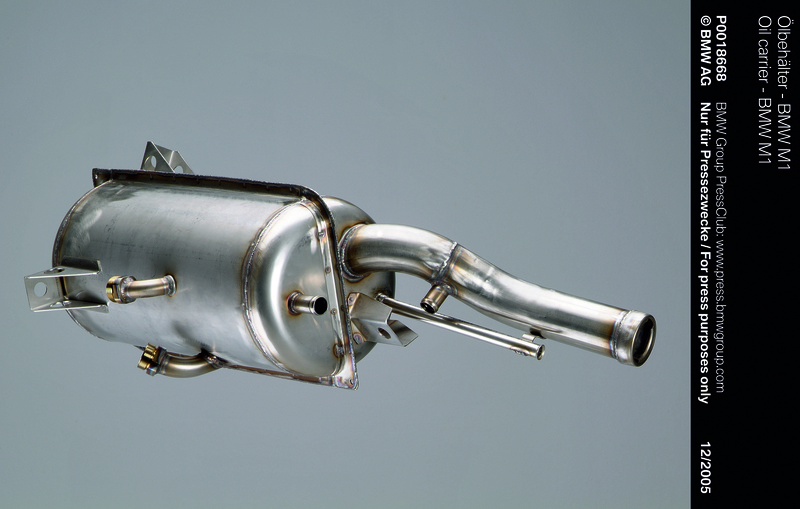
latest state of the art. Dry sump lubrication bore clear testimony to
the sporting genes of the M1, the car being able to achieve a very high
level of lateral acceleration. Fuel was supplied to the engine from two
tanks right and left in front of the rear axle, each with a capacity of
58 litres (12.8 Imp gals). From the engine power was transmitted
through a ZF five-speed gearbox connected to the engine by a two-plate
dry clutch. The final drive differential came as standard with 40 per
cent locking action. 264.7 km/h (164.1 mph): Germany's fastest sports
car. The six-cylinder power unit was smooth and free of vibrations
throughout its entire range of engine speed, even remaining quite
docile at lower speeds. But this changed instantaneously once the rev
counter hit 5,000 rpm, the M88 pushing the M1 forwards up to its top
engine speed of 7,000 rpm with power and energy making even the most
jaded car testers wax lyrical: "Once the throttle butterflies are
fully open you feel a tremendous kick from behind continuing well
beyond the 200 km/h-mark. There is no need to shift to fifth gear, for
example, until you reach a speed of 213 km/h (132 mph) and from there
you continue to accelerate up and up to the car's top speed."
Which, as recorded by Germany's leading car magazine in autumn 1979,
was 264.7 km/h (164.1 mph). Acceleration from 0-100 km/h in 5.6 seconds
also looked very good, which is not surprising considering the
power-to-weight ratio of 4,7 kg/PS, making things relatively easy for
the 204 kW (277 bhp) engine. The M1 was conceived and built for racing
right from the start, the elaborate suspension with double wishbones on
each wheel, gas-pressure dampers and two anti-roll bars remaining in
command throughout the car's entire speed range. With the exception of
the more comfort-oriented response of the moving parts and the modified
spring/damper setting, the road suspension was identical to the chassis
and suspension on the Group four racing version. Four inner-vented
brake discs ensured phenomenal stopping power from any speed and the
front axle came with 30 per cent anti-dive minimising body movement
even when applying the brakes all-out. Tyres measuring 205/50 VR 16 at
the front and 225/50 VR 16 at the rear, finally, were certainly very
big and muscular in those days. A low centre of gravity of just 460
millimetres (18.5'' ) above the road, track measuring 1,550 mm (61.02''
) at the front and 1,576 mm (62.04'' ) at the rear, together with the
mid-engined concept providing weight distribution of 44.1:55.9, made
the M1 a genuine performer in bends, even though the car called for an
experienced driver when pushed to the limit. Typical of a mid-engined
performance car with a low level of inertia around its vertical axis,
the M1 required quick and forceful counter steering as soon as lateral
acceleration exceeded a reasonable limit and the rear threatened to
break away. But the rack-and-pinion steering without power assistance
and with a direct transmission ratio was simply perfect for this kind
of control. Displaced castor and a small steering roll radius served at
the same time to combine ease of control with supreme road contact
absolutely essential for the active driver. The twin-joint safety
steering column, in turn, was adjustable for reach. A racing car with
crash-proven passive safety. Although the M1 was a sports car par
excellence, both the driver and passenger enjoyed a certain standard of
comfort. For whilst the suspension was firm and taut, it nevertheless
absorbed bumps on the road without requiring the occupants to take any
heavy jolts. Indeed, the driver and passenger were safely cocooned in a
rectangular steel-profile space-frame complete with a bonded and
riveted plastic skin free of distortion. The luggage compartment beneath
the front lid was sufficient for a weekend for two, and even air
conditioning was available. And the BMW M1 was safe: Since the new
sports car received general homologation for the entire production
series (as opposed to individual approval of each single model
one-by-one), BMW was required to substantiate the passive safety of the
M1 in a series of crash tests - a precaution which later benefitted
many a racing driver. But whilst the public was admiring the new
super-sports car from Munich, with orders coming in one after the
other, production of the M1 suffered a nasty setback: Lamborghini was
unable to assemble the new car as planned and the order instead had to
go to Baur, the coach-building specialist in Stuttgart. This made the
M1 a genuine challenge in the production process with the space-frame
being built by Marchesi, the glass-fibre-reinforced plastic body shell
by T.I.R., both in the Italian town of Modena, and Giorgio Giugiaro's
company ItalDesign assembling these two basic units and adding the
interior trim and equipment. From there the car went to Stuttgart,
where Baur fitted all the mechanical systems and components. A big
attraction in Formula 1: the Procar Series. Facing these delays and
re-planning requirements, BMW suddenly became hard pressed for time.
After all, 400 units of the new car had to be built within 24 months
for homologation as a Group four competition car. And other companies
were also pressing forward. So to get the M1 on to the race track
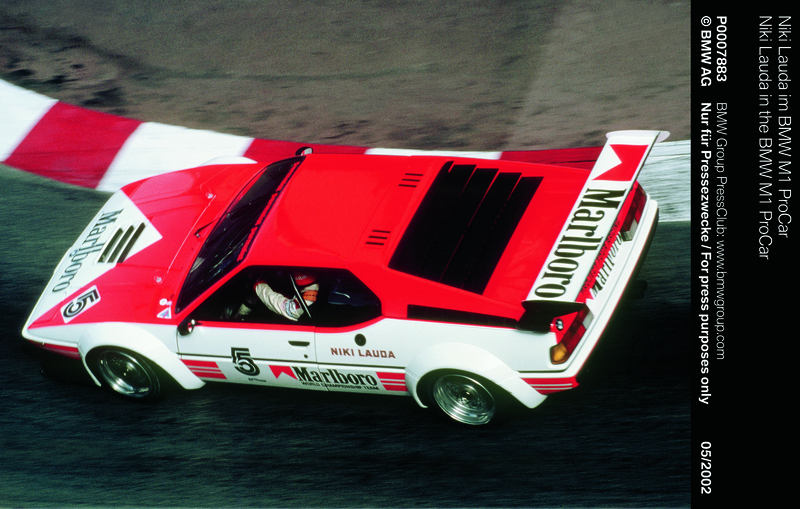
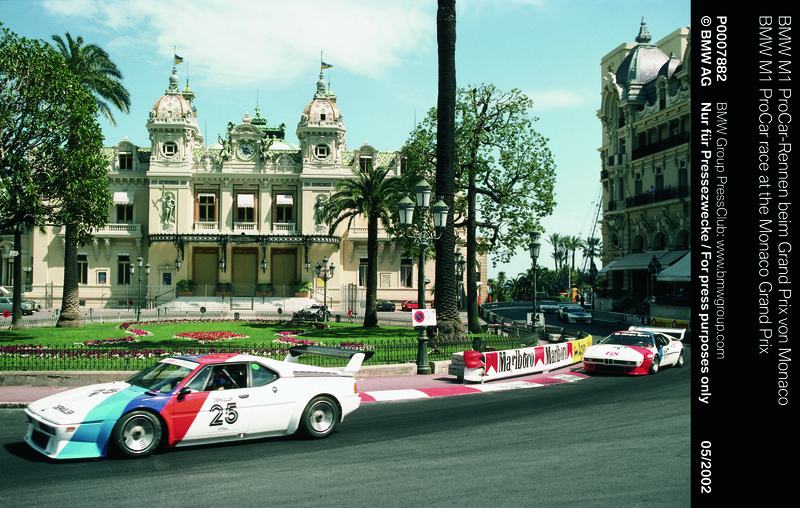
faster, Motorsport GmbH Director Jochen Neerpasch, teaming up with
Bernie Ecclestone and Max Mosley, launched the Procar Series, with
races held just before most of the European Formula 1 Grand Prix events
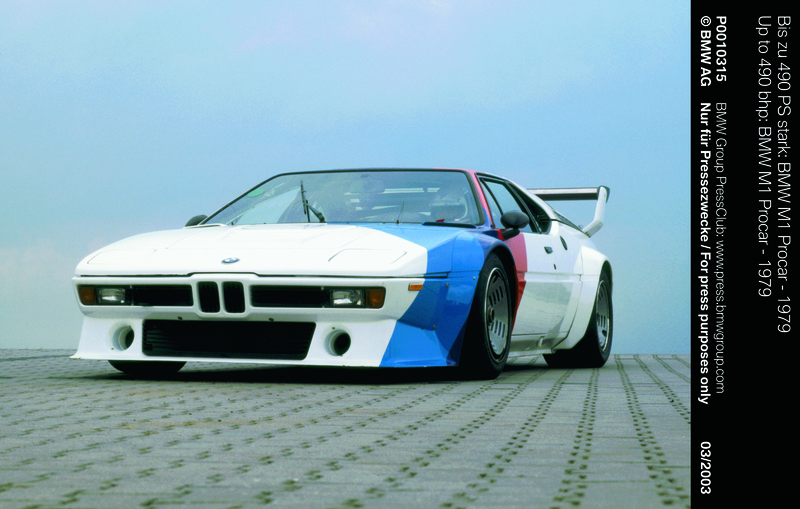
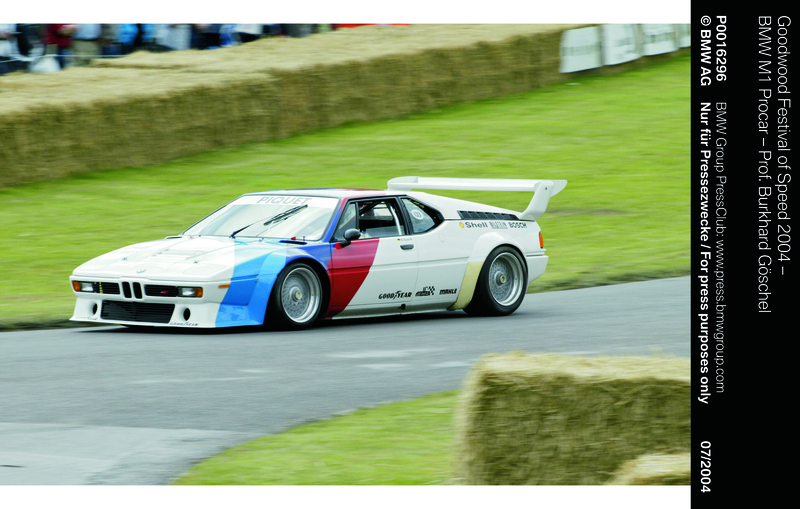
in the 1979/80 season. The big difference versus the road going car was
the engine of the Procar racing version: The first step for motor
racing was to tune the M88 six-cylinder the classic, conventional way,
with new camshafts, larger valves, forged pistons, optimised flow
ducts, slides instead of throttle butterflies and a modified exhaust
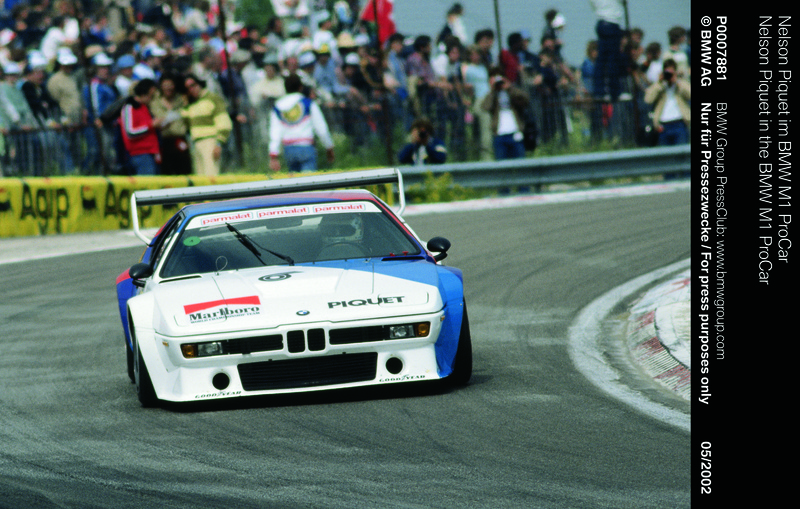
system boosting output to 470-490 bhp. With this kind of power, the
Procar version weighing just 1,020 kilos and fitted with the longest
transmission ratio had a top speed of approximately 310 km/h (192 mph).
Goodyear racing tyres measuring 10.0/23.5 x 16 at the front and
12.5/25.0 x 16 at the rear, together with a mighty rear wing, served to
provide the right kind of grip on the road. Driving one of these Group
four BMW M1s, Marc Surer lapped the Northern Circuit of Nurburgring in
just 7,55.9 minutes. Built to Group four regulations, the M1 was not
only placed at the disposal of five Formula 1 drivers in each race for
the Procar Trophy, but was also sold straight from the factory as BMW
Motorsport GmbH's first ready-to-go racing car at a price of DM
150,000. And indeed, some of the most renowned racing teams quickly
took up this offer, Schnitzer and Heidegger racing their own M1s on the
track, just like Osella in Italy and Ron Dennis in Great Britain.
Putting up a unique show for the crowd: Driving skill was the decisive
factor. Benefitting from this combination of BMW M1s prepared for racing
by Motorsport GmbH and those entered by private teams, and with the
cars driven by the big names in Formula 1 as well as ambitious racing
drivers in other categories, the Procar Series gained unique
popularity. This is where the world's best drivers faced the old hands
and newcomers in the scene, comparing their skills with cars virtually
identical in every respect. The crucial factor, therefore, was driving
skill - and this really caught the attention of the crowd: The Procar
races proved just as popular as the ensuing races for the Formula 1
World Championship. The recipe for success was perfectly prepared. The
fastest five Formula 1 drivers in the Friday practice sessions were
placed against 15 touring car specialists. With the Procar races being
held on the Saturday, the first five places on the grid went to the
stars, the remaining places were shared by the touring car cracks lined
up according to their practice times. And they all joined in: Drivers
and racing teams were happy to participate in the Procar Series,
provided they were not barred from doing so by their contracts.
"Maybe I was so fast because I just wanted to drive a BMW."
This is why on 12 May 1979, the Saturday before the Belgian Grand Prix
in Zolder, the two fastest drivers in practice were unable to take
their seats in the M1: Gilles Villeneuve and Jean-Pierre Jabouille had
exclusive contracts with other car manufacturers. But Jacques Laffite,
the third-fastest driver in the practice sessions, was just as happy to
start his engine in BMW's mid-engined Gran Tourisme as Clay Regazzoni,
the reigning World Champion Mario Andretti, as well as Niki Lauda and
Nelson Piquet. Nelson, later to become Formula 1 World Champion with
Brabham BMW and at the time No. 2 in the Brabham Team after Niki Lauda,
was unable to anticipate his great career back then when he said,
grinning: "Maybe I was so fast because I just wanted to drive a
BMW." But Nelson's competitors also had great names and a
great reputation: Hans-Joachim Stuck, who a day later came eighth in
the Grand Prix racing for the German ATS Team, the then reigning
Formula 2 European Champion Bruno Giacomelli, BMW Motorsport drivers
Toine Hezemans and Dieter Quester, as well as Elio de Angelis, another
star in Formula 1. And when the lights switched to green in this truly
outstanding line-up of Procar drivers, Hans-Joachim Stuck and young
Austrian star Markus Höttinger pulled away from the rest of the
grid after just a few laps. But in lap twelve the two of them got a
little too close for comfort and ended up in the fences. So to quote a
report on the race summing up the 20 laps, "Italian driver Elio de
Angelis proved to be the superman in the first M1 race, not only
winning the event, but also completing the fastest lap. And this was
after starting from 15th place and ploughing his way through the entire
field." Second place went to Toine Hezemans, Clay Regazzoni
finished third. The Procar Champions: Niki Lauda and Nelson Piquet.
Ultimately, however, the initial results started to change in the course
of the Procar season, Niki Lauda, already two-times Formula 1 World
Champion back then, scoring the largest number of points by the end of
the season: In eight races in the M1 Procar Series, Niki scored three
wins and finished second in one race. So whilst Hans-Joachim Stuck was
able to bring home victory in the last two races, he ended up five
points behind Lauda when the season finished. Only Clay Regazzoni held
on to his third place until the end of the season. Winning the last
three races in the 1980 series, Nelson Piquet brought home overall
victory in Procar racing a year later, followed by Alan Jones and
Hans-Joachim Stuck. And maybe this was no coincidence, since Alan Jones,
later to become Formula 1 World Champion, was a dedicated fan of the
M1, anyway, being one of the first customers to buy this sports car for
private use. These spectacular events more or less marked the end of the
M1 in Group four racing for a simple reason: The M1 was only
homologated for racing on 1 April 1981 and the regulations were changed
just nine months later, making it virtually impossible for the M1 to
compete any more. Boosted by up to 1,000 horsepower: Group five M1
with biturbo power unit. Even the success of the M1 in Group five was
unable to match the overwhelming Procar Series. Group five was for
special production cars derived from cars homologated in other racing
categories - and that was virtually the only restriction. The first M1s
to enter Group five were powered by normal-aspiration engines
developing maximum output of almost 500 bhp. To cope with engine torque
of up to 800 Newton-meters or not quite 600 lb-ft, these cars featured
a Hewland FG 400 five-speed gearbox, with locking action on the final
drive ranging from 75-100 per cent, depending on the racetrack. Later,
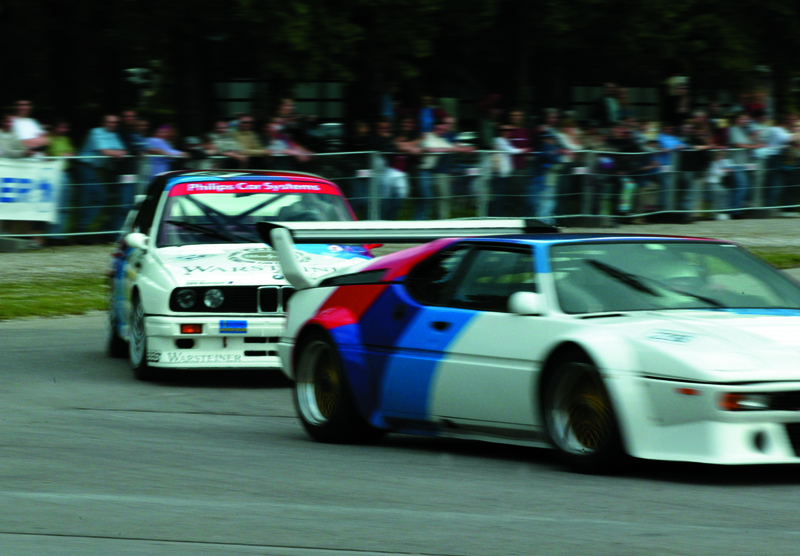
the engines of the Group five M1 were boosted up to 1,000 bhp by two
turbochargers. And to get as much of this huge power on to the road as
possible, the body of the car was modified by all kinds of spoilers
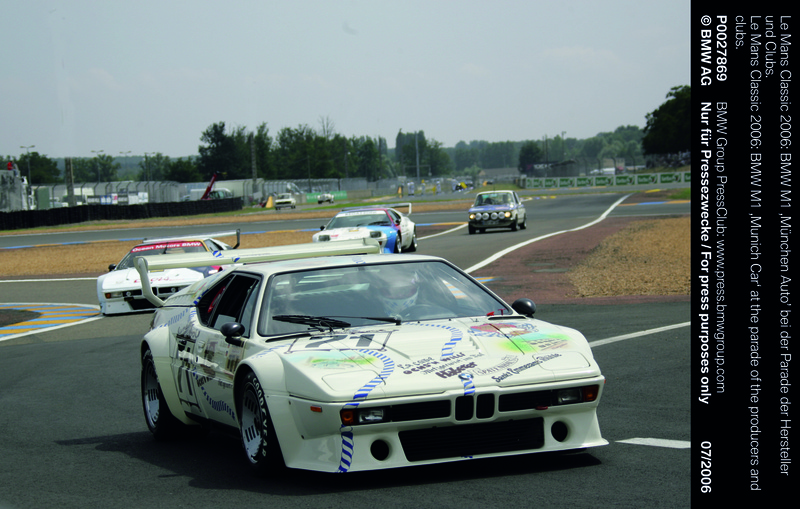
turning the M1 into real "wing monsters". This was also when
Team Schnitzer, the leading BMW tuning specialist, turned a Group five
M1 into the then most powerful racing car in the German Motor Racing
Championship, using a kevlar body on a specially reinforced chassis.
With this kind of power, Hans-Joachim Stuck came home first on both
Nürburgring and Salzburgring. The IMSA GTO Champion in the USA:
BMW M1. 1981 was a spectacular year of success for the M1 in the USA.
Any driver wishing to play an important role at the time in the popular
IMSA GTO Championship simply had to drive BMW's mid-engined
coupé. After forming the Red Lobster Team, Dave Cowart and
Kenper Miller finished the season first and second, naturally both at
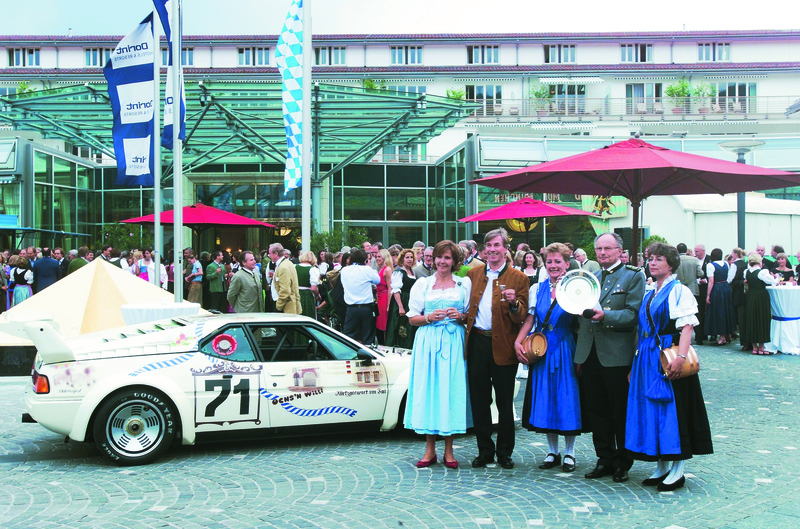
the wheel of a BMW M1. Indeed, the white M1 with starter number 25 won
twelve out of 16 races in the Championship. Only one driver among the
top ten in the 1981 Championship drove another car, not BMW's
mid-engined coupé. And the driver finishing seventh,
incidentally, was US racing legend Al Unser jr., naturally at the wheel
of an M1. Presenting art on fast wheels: M1 Art Car in the 24 Hours of
Le Mans. The M1 was not only an outstanding racing and sports car, but
also an equally unique work of art. In 1979 world-famous pop art idol
Andy Warhol tried his hand on a ready-to-race M1 coupé, using
his brush and paint to turn the M1 into one of the fastest works of art
in the world. This was BMW's fourth Art Car, a series of artistic
achievements based on various BMW models. Warhol was the first artist
to paint the body of the car directly with powerful swipes of his
brush: "But the car is better than the art", Warhol said
himself afterwards in a rather dry comment. Boasting starter number 76,
the BMW M1 Art Car subsequently struggled for the title in Le Mans
throughout the whole 24 hours, ultimately finishing the race sixth.
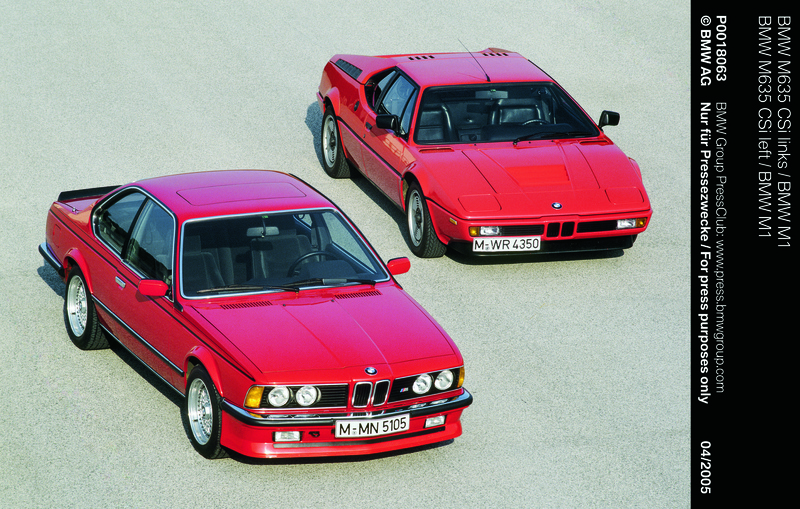
Transplanting the M1 six-cylinder into production cars: the M5 and M
635 CSi. Production of the M1 ended in 1981 after a production run of
445 units, 399 for the road and 46 in Procar trim. But the heart of the
M1, the M88 six-cylinder 24-valve power unit, was far too good to
retire from the scene. In particular, it was much too progressive,
powerful and superior. So in 1984 Motorsport GmbH once again hit the
headlines, making aficionados of high-performance cars wax lyrical once
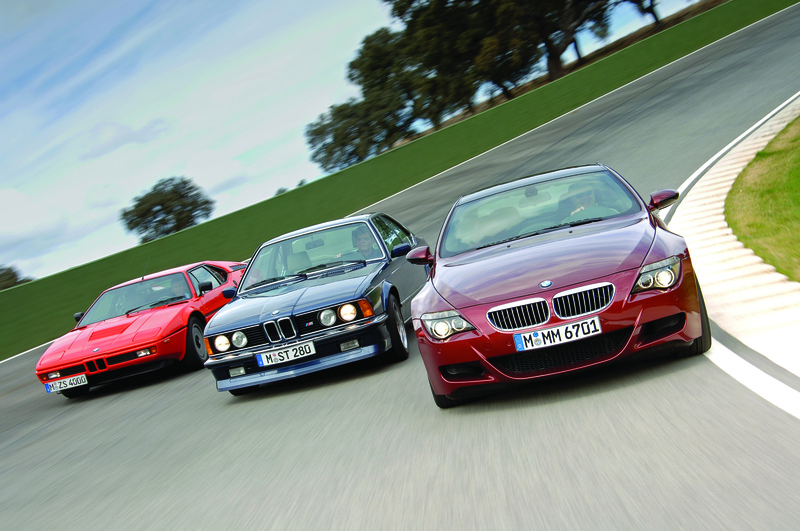
again when the 255 km/h (158 mph) M 635 CSi coupé and the M5
brought back the M1's fast-revving power machine. Particularly the
hand-built M5 quickly became a real legend: This was truly a wolf in
sheep's clothing, with maximum output of 286 bhp almost three times as
powerful as the 518i. And whilst at first sight it almost looked the
same as its large-volume counterpart, top speed of 245 km/h (152 mph)
quickly captured the attention and admiration of countless owners of
large saloons and sports cars having to give way to the M5 on the
Autobahn even with the gas pedal pushed right down to the floor. Not
surprisingly, therefore, this marked the birth of the
"Businessman's Express". Specifications BMW M1 -
production model. Engine Water-cooled
straight-six in mid-engine arrangement Four
valves per cylinder, two overhead cam-shaft with double roller chain
drive Capacity (cc) 3,453 Stroke (mm/in)
84/3.31 Bore (mm/in) 93.4/3.68 Max output (kW/bhp)
204/277 at 6,500 at rpm Max torque (Nm/lb-ft) 330/243 at
5,000 at rpm Max engine speed (rpm) 7,000 Mean piston speed at max
output (m/sec) 17.4 Compression ratio 9:1 Fuel supply
Kugelfischer system mechanical fuel injection three double
throttle butterfly manifolds with six throttle butterflies, dia 46
mm Fuel grade (RON) 98 Fuel tank capacity (ltr.) (2 x
58) 116 Lubrication Pressure-circuit
lubrication with dry sump oil system Triple
suction pump next to crankcase, pressure pump in the oil sump
Electrical system. Battery voltage (V) 12 Battery
output (Ah) 55 Alternator
14 V/65 A Ignition Magneti-Marelli
contact-free, all-electronic digital ignition
system controlled by the flywheel Spark plugs Bosch x
4 CS Chassis and suspension. Frame
Spaceframe with plastic body Front axle
Double track control arm (wishbone) with light-alloy wheel
mounts Independent suspension Rear axle
Double track control arm (trapezoid arm at the bottom) with
light-alloy wheel mounts Independent suspension Dampers/springs
Bilstein gas pressure dampers Concentric coil springs
adjustable for height Anti-roll bar dia (mm/in) front 23/0.91
rear 19/0.75 Brakes Inner-vented
fixed-calliper disc brakes in two-circuit system
with brake servo pressure reducer on the rear axle Brake disc
dia(mm/in) front 300/11 rear 297/11.69 Brake
disc width (mm/in) front 32/1.26 rear 26/1.02 Swept brake area
(cm²) front 96/wheel rear 69/wheel Parking brake
Operated mechanically, acting on separate brake callipers
on the rear axle Steering
Rack-and-pinion steering, two-joint safety steering column
adjustable for reach Steering wheel dia (mm/in) 360/14.2 Wheels
Cast light-alloy wheels
front 7'' x 16'' rear
8'' x 16'' Tyres Pirelli P7
front 205/55 VR 16 rear
225/50 VR 16 Power transmission. Clutch
F + S hydraulically operated, double-disc dry clutch Gearbox
ZF five-speed manual gearbox with integrated final drive
Transmission ratios, manual gearbox:
1st 2.42 2nd 1.61
3rd 1.14 4th
0.846 5th 0.704
Reverse 2.86 Final drive 4.22
Dimensions (mm/in). Wheelbase 2,560/100.8 Track, front
1,550/61.0 Track, rear 1,576/62.0 Length
4,360/171.7 Width 1,824/71.8 Height, unladen
1,140/44.9 Ground clearance, laden 125/4.9 Turning circle
13,000/512 Technical Description BMW M1 Group four. Grand Tourisme
based on international motorsport regulations. Grand Tourisme cars are
built in a small series and must have at least two seats. They may be
improved and modified in the interest of enhanced performance. The
modifications allowed for this purpose are specified in detail in the
International Motorsport Regulations. In their looks and appearance,
Group four cars bear a close resemblance to the production model.
Engine. Six-cylinder in-line power unit, water-cooled, four valves per
cylinder, mechanical fuel injection, dry sump lubrication, oil cooler
at the front end of the car, 94 mm/3.70'' bore, 84 mm/3.31'' stroke,
3,500 cc capacity, max output 345 kW (470 bhp) at 9,000 rpm, max torque
390 Nm (287 lb-ft) at 7,000 rpm. Power transmission. Hydraulically
operated double-plate clutch, ZF five-speed gearbox, differential and
gearbox cooling system. Chassis and suspension. Double track control
arms on the front and rear axles, magnesium wheel mounts, aluminium
wheel hubs with central bolt, Bilstein dampers with bolted spring
plates, anti-roll bars front and rear, exchangeable and adjustable, ATE
brake system, swing callipers and vented discs front and rear, twin
master brake cylinders, brake forces adjustable while driving, rims
11.0 x 16 at the front, 12.5 x 16 at the rear, tyres 10.0/23.5 x 16 at
the front, 12.5/25.0 x 16 at the rear, rack-and-pinion steering with
direct transmission ratio. Technical Description BMW M1 Group five.
Special production car based on international motorsport regulations.
Special production cars do not require a minimum production volume, but
must be derived from cars homologated in Groups one, two, three or
four. All modifications allowed on Group one to four cars as well as
additional Group five modifications are admissible, as specified by the
International Motorsport Regulations. Greater freedom in the shape and
dimensions of the flared wheel arches as well as the use of aerodynamic
improvements front and rear significantly change the looks of the body.
Beneath the body shell the manufacturer is able to choose and configure
the various systems (engine, transmission, suspension, brakes) with
hardly any restrictions. The Group five BMW M1 features a 3.2-litre
six-cylinder 24-valve power unit with an exhaust gas turbocharger
developing up to 850 bhp at 9,000 rpm. Boost pressure is between 1.2
and 1.4 atmosphere. The Group five version benefits from technical
optimisation of all units and systems. The car's final specifications
will be published at a later date. Pictures of BMW M1 you will find
under https://newsroom.bmwgroup.com/global/en