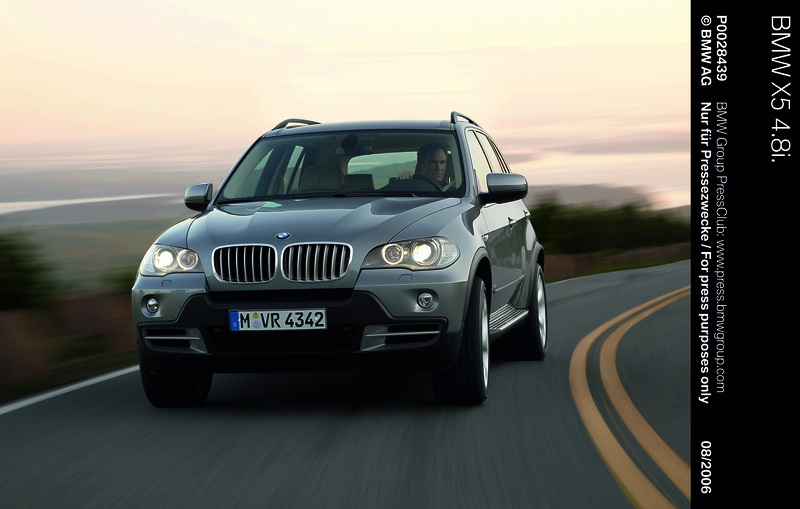
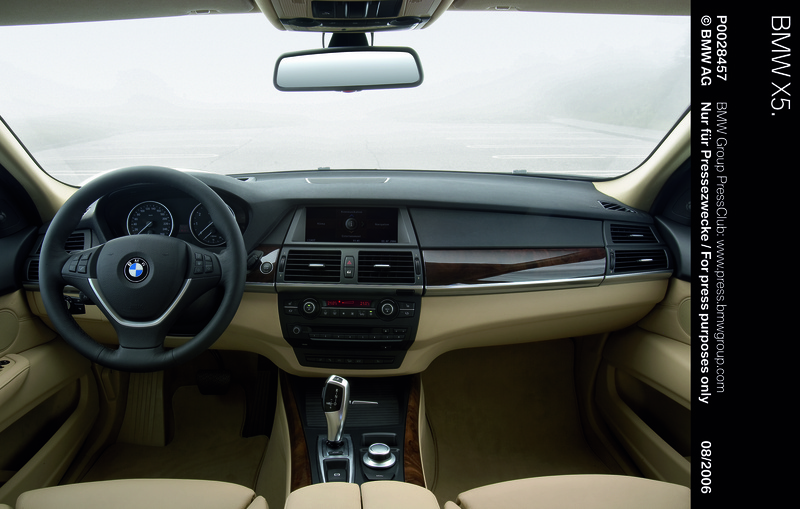
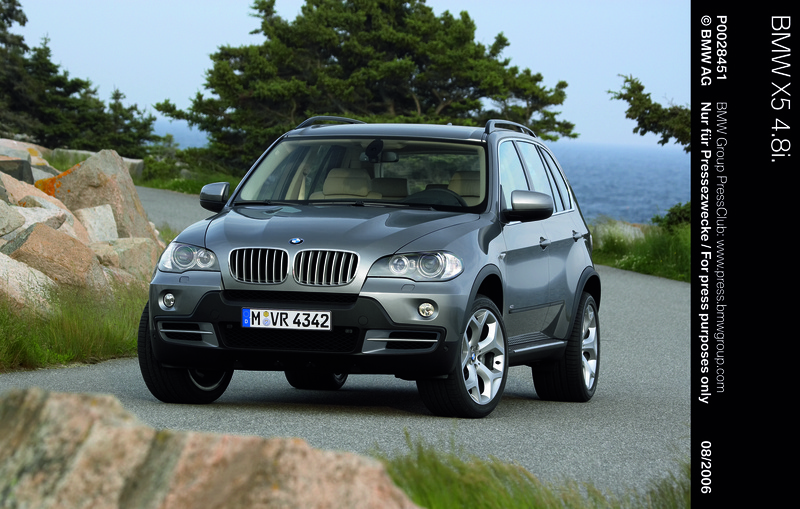
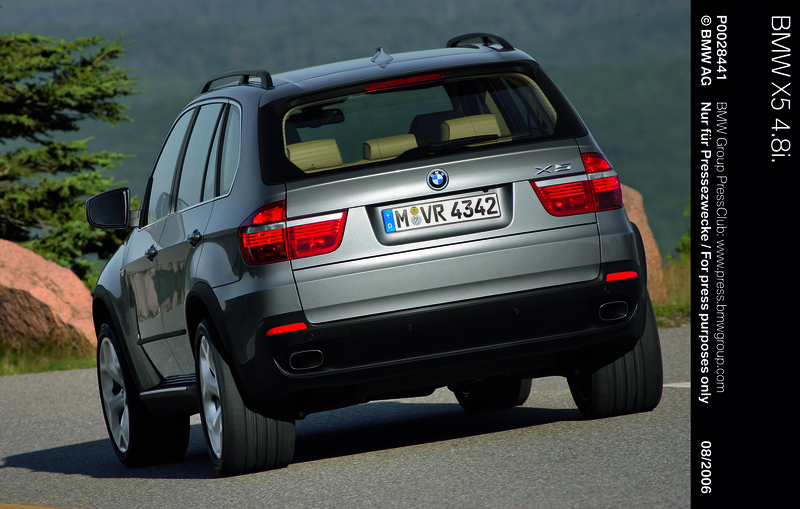
The all-new BMW X5
The BMW X5 defined a new segment of the car market when it first appeared in
1999. It was the first SUV-type vehicle to offer a genuinely sporty car-like
drive. BMW coined the phrase Sports Activity Vehicle to define its dynamic
attributes over its rivals' utilitarian construction. Year-on-year record sales
since its launch in the UK are evidence of its appeal to customers and it set a
new standard for the competition.
Seven years after its 1999 Frankfurt Motor Show debut, BMW is pleased to
announce the arrival of an all-new X5 Sports Activity Vehicle that aims to
redefine its class courtesy of an enviable list of firsts. The new BMW X5 is
the world's first SAV to be offered with Head-up Display and an active
suspension system - BMW's Adaptive Drive package. It is the first SAV that can
be specified with Active Steering for unsurpassed manoeuvrability and the first
to be shod with Run-flat tyres for added safety. It is also the first BMW to
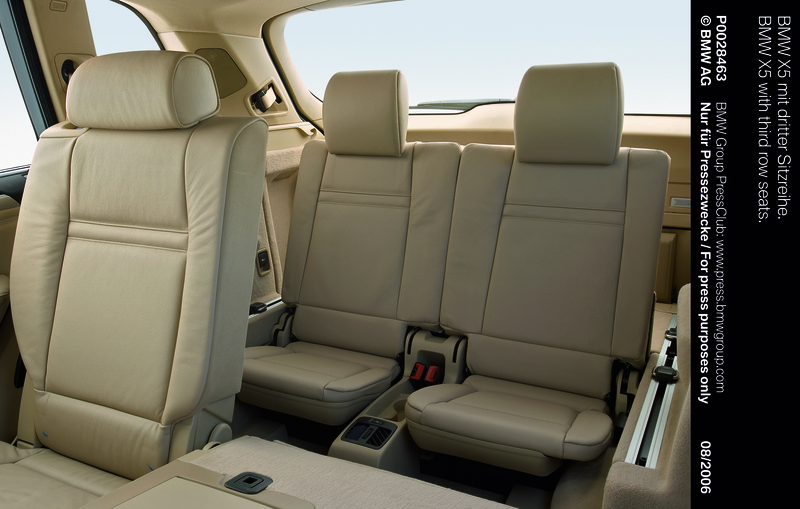
offer a third row of seats for added practicality.
See attached download document for table of basic performance and fuel
consumption figures.
New standards in economy and emissions
The new BMW X5 is powered by the latest, most advanced engines. A choice of
three units is offered, all of which feature increased power compared to the
engines in the outgoing model, while also posting more economical consumption
figures and reduced emissions. The biggest seller in the UK will be a 2,993cc
six-cylinder diesel but, for those preferring the characteristics of petrol
power, the X5 can also be specified with a 2,996cc six-cylinder or a 4,799cc V8
engine.
Diesel economy
The BMW X5 3.0d uses an engine with high-precision piezo crystal injection
technology for better economy and emission figures. This advanced technology,
combined with the introduction of an all aluminium crankcase that saves 25kgs
in weight compared to the former 3.0-litre diesel engine, sees the new X5
record improved performance figures. It is now seven per cent more fuel
efficient with a combined fuel consumption figure of 32.5mpg while also
emitting eight per cent less CO2. The 3.0d engine records 231g/km.
While the new X5 is more economical it still comes with increased power. Output
from the 3.0d engine is 231hp, up six per cent compared to the previous model,
and maximum torque is 520 Nm, up four per cent. This peak torque is available
from 2,000 to 2 ,750 rpm offering near instantaneous reactions for swift yet
refined motoring. Such an advanced engine powers the BMW X5 3.0d from zero to
62mph in 8.3 seconds before going on to a top speed of 134 mph (130 mph for a
non-Dynamic Package equipped model).
Petrol power
Based on the world's lightest production six-cylinder petrol engine, the BMW X5
3.0si comes equipped with BMW's patented Double VANOS and VALVETRONIC variable
valve technologies for high performance, yet economical, motoring. Put simply,
Double VANOS determines when the engine's valves open, while VALVETRONIC
determines by how much. The net effect of both systems is that the engine is
always operating at its optimum efficiency with only the exact amount of fuel
needed being used. This is why the X5 3.0si has a combined fuel consumption of
25.9mpg (an 18 per cent improvement compared to the previous X5 3.0i) and an
emissions figure of 260g/km, but still delivers maximum driver enjoyment.
Developing 272hp at 6,650rpm, the high-revving nature of the engine and its
sonorous exhaust note set it apart from the competition. Peak torque of 315Nm
is attained at 2,750rpm for in-gear responsiveness, with zero to 62mph
dispatched in 8.1 seconds. Top speed for the new BMW X5 3.0si is140mph (when
fitted with the Dynamic Package).
Representing the flagship of the range, the BMW X5 4.8i with its 355hp engine
is faster from zero to 62mph and has a higher top speed than the supercharged
Range Rover Sport or a Mercedes Benz ML500 Sport. The 4,799cc V8 powers the car
to 62mph in just 6.5 seconds before going on to a top speed of 150mph (when
fitted with the Dynamic Package). Despite such scintillating performance, fuel
consumption is a respectable 22.6mpg on the combined cycle and emissions are
299g/km.
New six-speed automatic gearbox
The new BMW X5 comes with an all-new faster-shifting six-speed automatic
transmission. The gearbox now features a new torque converter with enhanced
software resulting in gearshift times up to 50 per cent quicker compared with
the previous automatic gearbox. A new design of gearstick also creates more
space on the centre console for additional storage space and cupholders. The
use of an electronic parking brake in place of a conventional handbrake aids
ergonomics further.
Driving dynamics and safety
The BMW X5 offers unsurpassed safety credentials and on-road ability. Not only
does its intelligent xDrive four-wheel-drive system transfer power between
front and rear wheels depending on available grip for optimum handling, but it
can now be specified with Adaptive Drive and Active Steering - two advanced
systems never offered before on a BMW X model.
Adaptive Drive uses active hydraulic anti-roll bars to counteract the cornering
forces of the car to keep the body from leaning too heavily and unsettling the
occupants. In addition to this Adaptive Drive incorporates an Electronic Damper
Control system that uses sensors to continuously adjust the damper setting for
the optimum comfort.
Active Steering uses an electronically operated planetary gear intersecting the
steering shaft that adds more lock than inputted by the driver at slow speads
to make parking effortless. When driving at speed the opposite occurs for a
smoother, more composed ride.
First SAV with Head-up Display and Run-flat tyres
The BMW X5 can be specified with Head-up Display - a first for a Sports
Activity Vehicle or SUV. For enhanced safety the system projects speed,
navigation and check control messages into the line of sight of the driver.
Such a system allows the driver to keep his eyes on the road ahead while still
being made aware of important instructions.
A further safety benefit is the fitting of Run-flat tyres - again a first for
an SAV or SUV. Run-flat tyres allow a driver to continue his or her journey in
the event of a puncture for up to 90 miles at speeds of 50mph. Run-flat tyres
also provide the best stability in the event of a blowout. The BMW X5 comes
fitted with 18-inch alloy wheels and Run-flat tyres as standard with optional
19- and 20-inch alloy wheels offered.
The latest in traction control technology, Dynamic Stability Control+, is also
standard on the new X5. DSC+ comes with four unique functions for added safety
and comfort. Brake Pre-tensioning shortens stopping distances during an
emergency stop by priming the brakes should it detect the driver lifting off
the accelerator sharply in reaction to an incident ahead. Brake Drying improves
braking performance in the wet by periodically applying the brake pads to scrub
away the film of water that can build up on the brake discs. Hill Start
Assistant allows a car to pull away smoothly on a steep gradient without
rolling backwards, courtesy of the brakes being held for the short time it
takes the driver to apply the accelerator after releasing the foot or
handbrake. Brake Fade Compensation applies additional braking without any extra
effort from the driver should sensors detect that the brake pads are starting
to lose 'bite' due to heat build up.
The driver of a BMW X5 will now also be able to select the Dynamic Traction
Control (DTC) function of DSC+. DTC allows for a greater degree of wheel slip
for more spirited driving without the main traction control system safety net
intervening. This option can be selected via a button on the centre console.
Additional seating practicality comes with new design
In a first for a BMW, the new X5 can be specified with an optional third row of
seats allowing up to seven occupants to be transported in comfort. An increase
of 19cms in overall body length and an increase in body width of 6cms, combined
with innovative design, has made it possible to introduce a brace of seats in
the rear, while still retaining luggage space. However, unlike many competitors
even with all seven seats in place there is still 200 litres of boot space. The
two extra seats, complete with three-point seatbelts and head restraints, are
stowed under the boot floor when not in use. BMW X5 owners who do not specify
the third row of seats benefit instead from an additional 90-litre storage
compartment situated below the boot floor.
Whatever seating combination an owner chooses, the new BMW X5 is capable of
taking most payloads. In a standard five-seat configuration the boot measures
620 litres - up 155 litres compared to the outgoing X5. For those looking to
move sizeable objects, luggage capacity increases to 1,750 litres with all the
rear seats stowed - a figure greater than that of any other BMW.
While being one of the most practical cars BMW has ever made, the new X5 still
has a luxurious interior feel and a dynamic and sporty exterior shape. A drag
coefficient as low as 0.33 places the BMW X5 at the top of its segment as the
most aerodynamically efficient large SAV or SUV. This low figure is partly
achieved by a rear tailgate that incorporates a roof spoiler and a near flat
underbody to aid airflow. Nine exterior colours are offered initially alongside
four levels of trim and seven upholstery colours to allow owners to personalise
their X5s.
BMW's innovative iDrive control system also comes to the X5 for the first time.
A new 'wave' style of dashboard houses the colour display while the iDrive
controller sits on the centre console adjacent to the new style of gear
selector. The controller is complemented by eight buttons integrated as system
short cuts for ease of use.
Parking camera
Supplementing the standard fit front and rear Park Distance Control, X5
customers have the option to specify a rear camera for added parking
convenience. Automatically activated when the reverse gear is selected, the
driver is presented with a wide-angle colour image on the iDrive display in the
centre console.
The BMW X5 has proved to be a huge global hit since it was launched in 1999
with more than 580,000 sold. In the UK its sales reached record levels each
year. In 2001, the car's first full year, BMW UK sold 5,650. In 2005 a record
10,808 X5s found customers in the UK. Prices for the new BMW X5 and details of
the Dynamic Package will be revealed nearer to the Spring 2007 UK market launch
date.
Ends