Heritage as inspiration: BMW M1 Homage.
Munich/Cernobbio. To mark the 30th anniversary of the BMW M1 super
sports car, BMW Group Design is presenting a homage to this legendary
model as part of the Concorso d'Eleganza Villa d'Este 2008. The BMW M1
designed by Giorgio Giugiaro was a car of superlatives and a highly
emotive vehicle that was uncompromisingly primed for the race track.
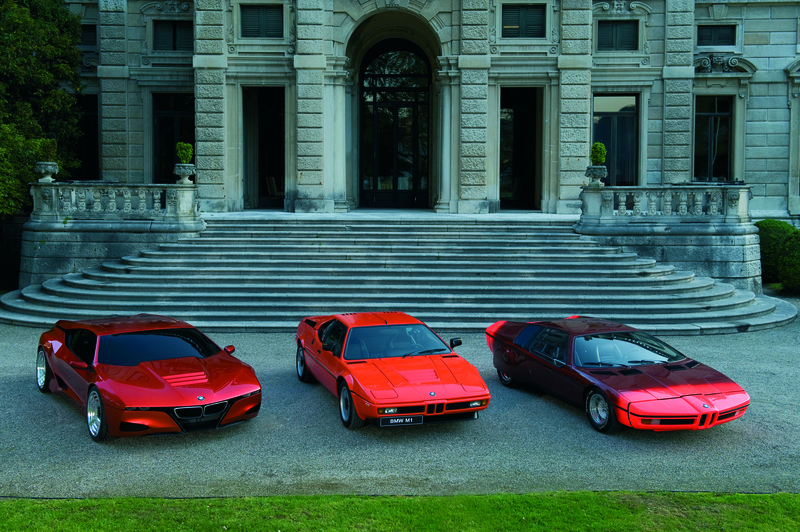
Spawning this development was the BMW Turbo by Paul Bracq, a
revolutionary concept car which, in addition to its groundbreaking
functional design, also boasted a raft of technical innovations. It is
from these two unique vehicles that the BMW M1 Homage takes its cue - a
design study that pays tribute to its forerunner models and an
embodiment of the competence, creativity and potential of the BMW Group
Design team. "For BMW, heritage is always also a living heritage.
Drawing inspiration from your own past and thereby reinventing yourself
- that is exactly what the BMW M1 Homage demonstrates in impressive
style." Dr Klaus Draeger, BMW Group Board Member, Development A
particular forte of BMW Group Design is to draw on its own powerful
history and actively feed this into the design of the future. The BMW
M1 Homage is a design study in the tradition of a BMW Turbo that
represents a contemporary take on the BMW M1 and the mid-engine
concept. This tribute exhibits an emotional design that showcases
technology and integrates it into the overall aesthetics of the
vehicle. The Concorso d'Eleganza Villa d'Este provides the perfect
backdrop for the BMW M1 Homage. Here automotive beauties from the past
meet the concept cars and design studies of the future. It is in this
dynamic field of tension between past and present that the BMW Group
Design team affords insights into its own perspective on a historically
inspired automotive future. Homage to the BMW M1. "For a company
as for a product, it is important to be aware of one's roots. In the
spirit of Giugiaro and Bracq, the BMW M1 Homage unites the BMW values of
design and technology in a highly emotional and exciting
interpretation." Christopher E. Bangle, Director Design BMW Group
The BMW M1 was an utterly uncompromising super sports car oozing
passion; its forerunner, the BMW Turbo by Paul Bracq, displayed
innovative technical solutions that found their expression in emotional
design. It is precisely this blend - of technology and design,
rationality and passion - that the BMW M1 Homage embodies. It presents
an exciting and authentic interpretation of the BMW M1 and the
mid-engine concept from a present-day perspective, and the legacy of
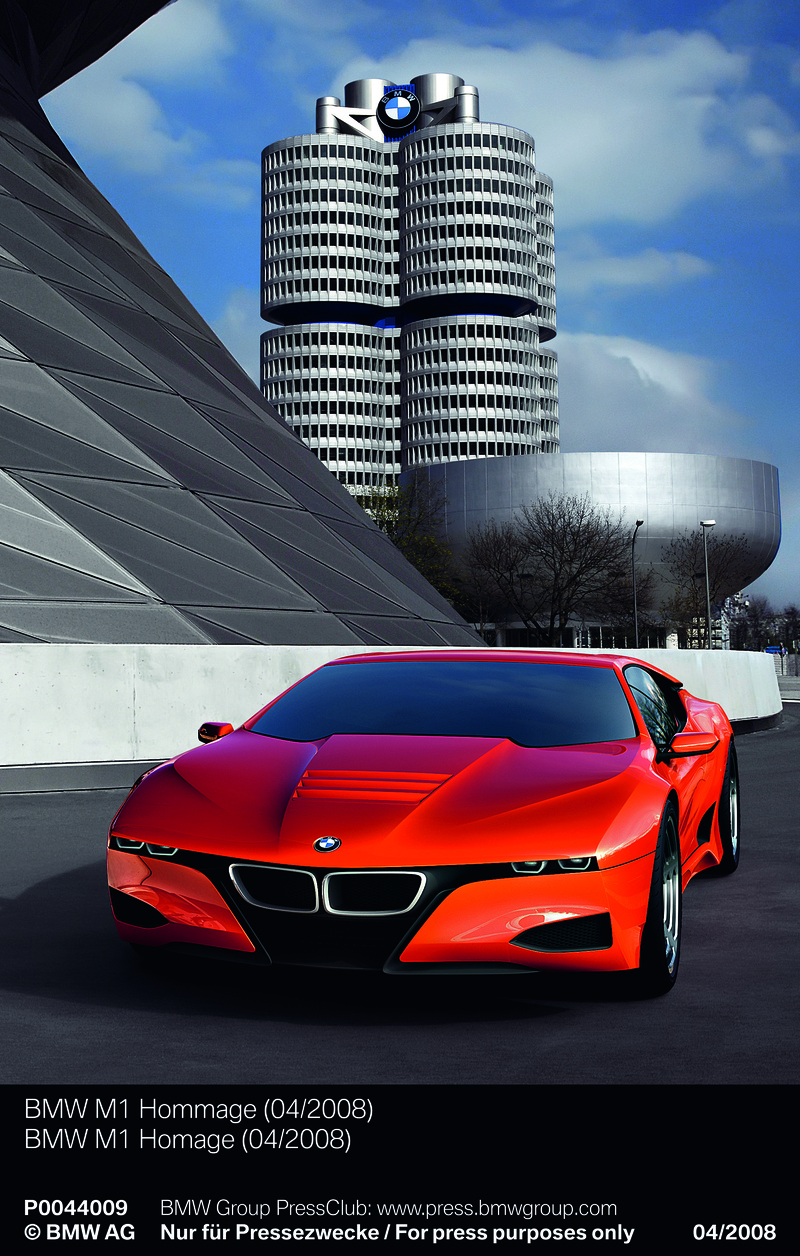
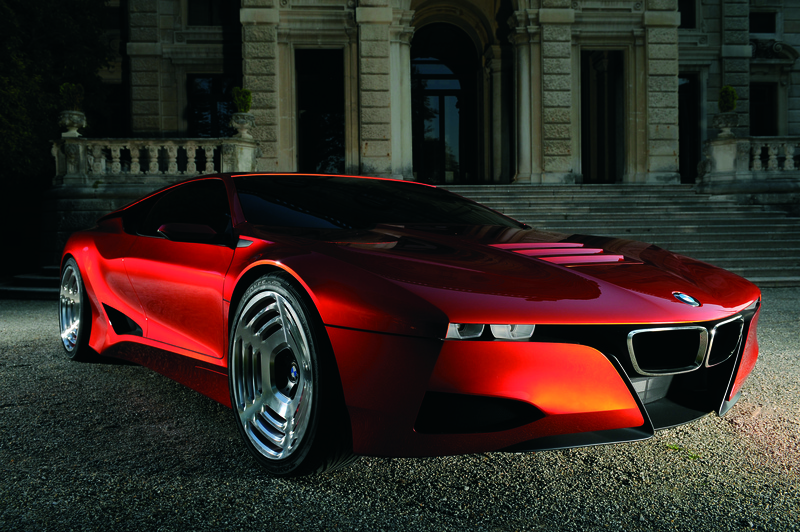
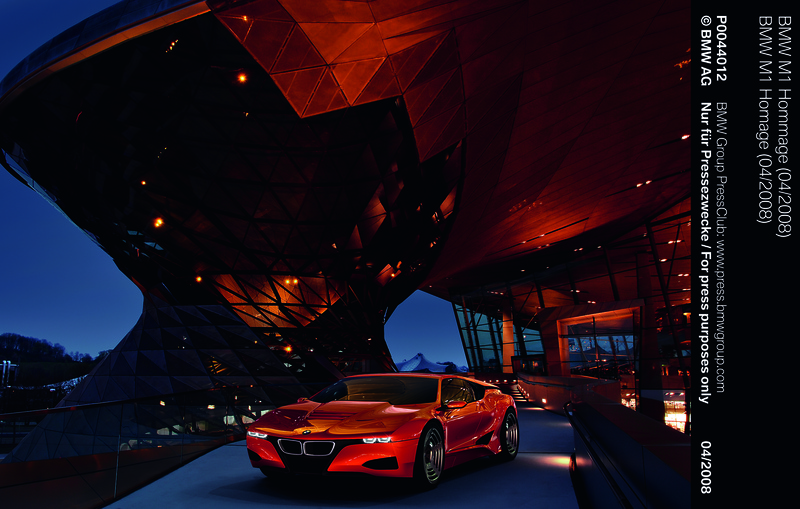
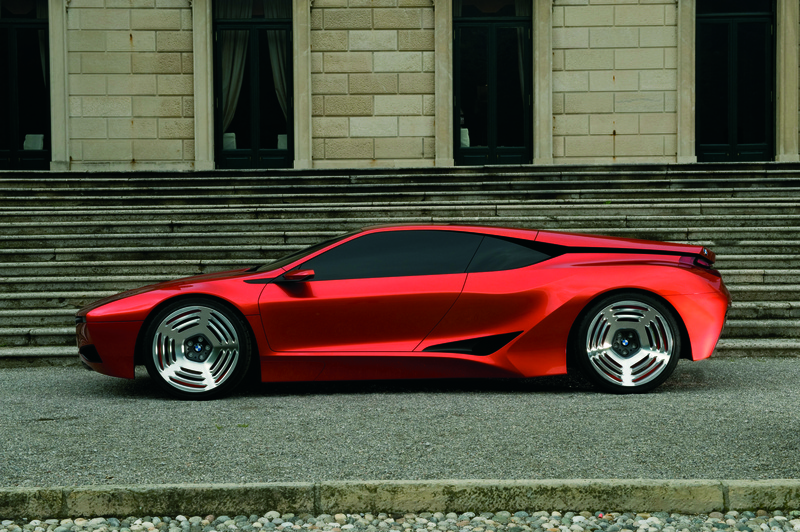
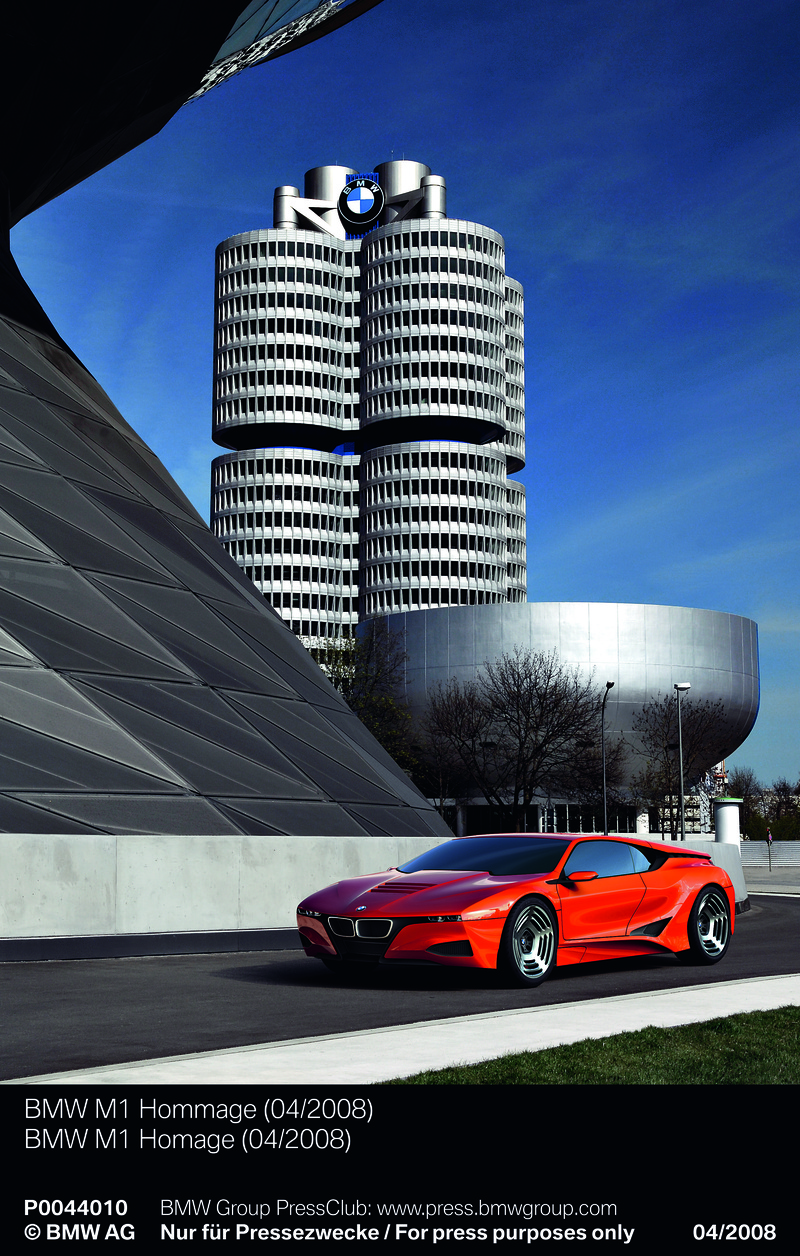
the BMW M1 Homage is obvious at first glance. Unquestioningly it takes
up the graphic play of the hallmark BMW M1 colours black and orange and
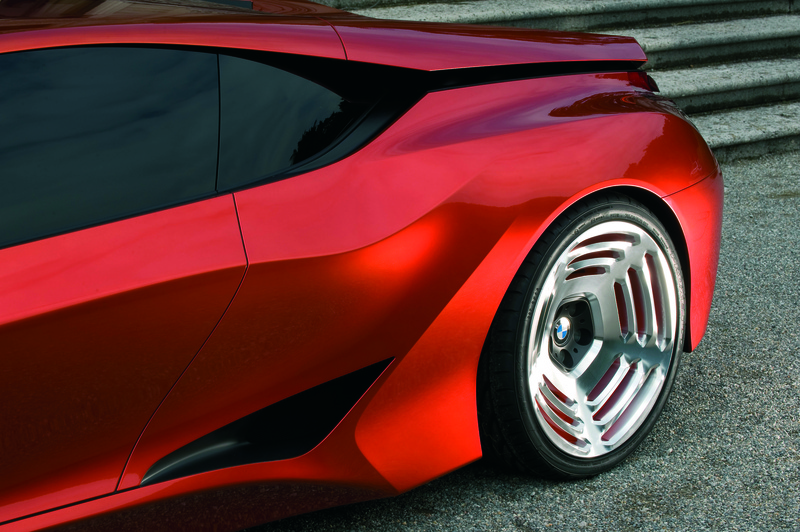
interprets them anew. The Liquid Orange paintwork exclusively developed
for the BMW M1 Homage cites the classic BMW M1 colour, yet surprises
with its powerfully iridescent play of colour and brilliant depth. It
shapes the extrovert surface language and strikingly highlights the
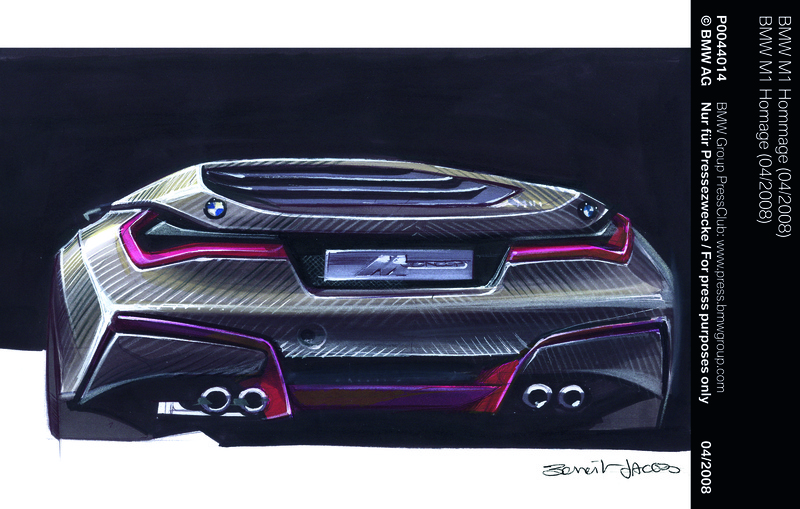
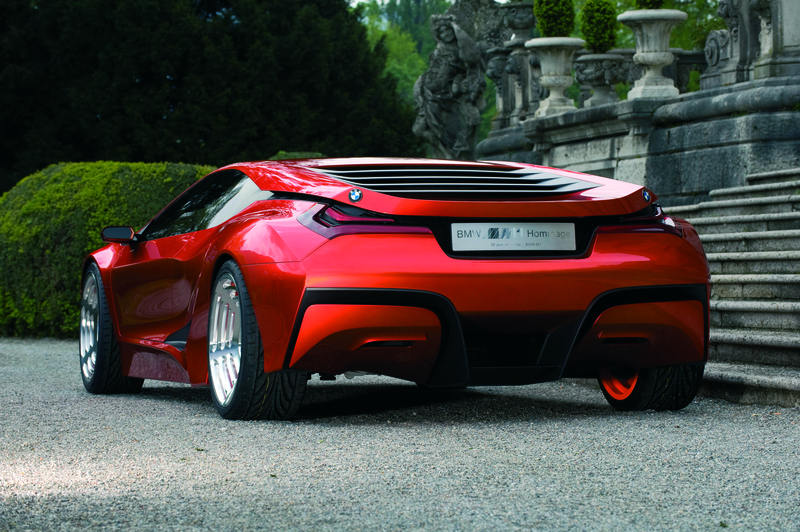
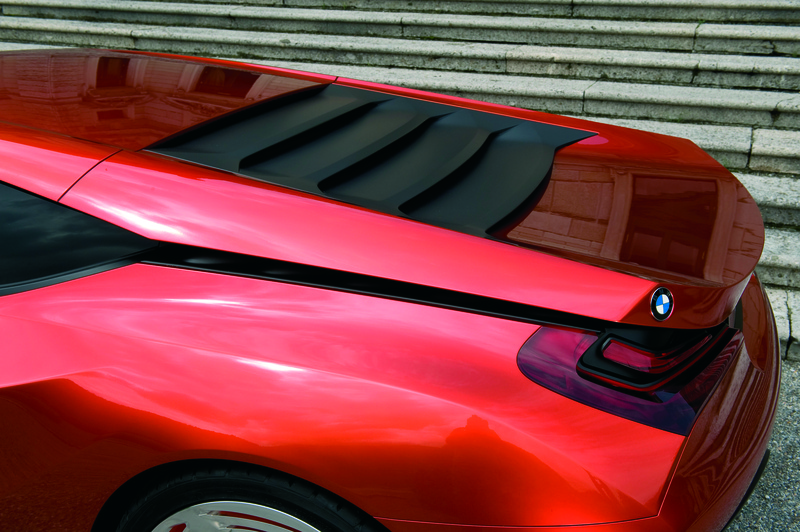
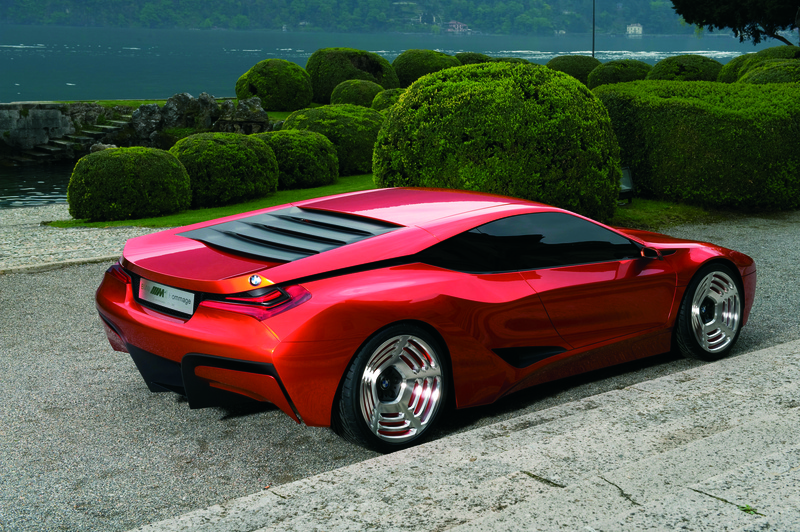
eloquent interplay of convex and concave surfaces. Mention the BMW
M1, and another feature that immediately springs to mind is the
characteristic twin logo at the rear, on the right and left edge above
the tail lights. For BMW, this particular arrangement of its emblems
has always signalled a mid-engined model. In the development stage of
the BMW M1 this dual emblem was the first styling element to be
approved even before the initial sketches were drawn. Likewise, it was
confirmed from the outset that the BMW M1 Homage would feature the same
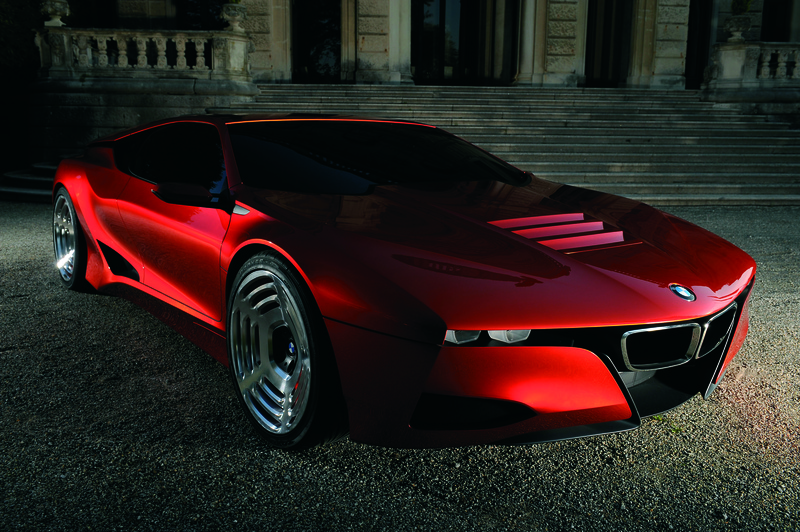
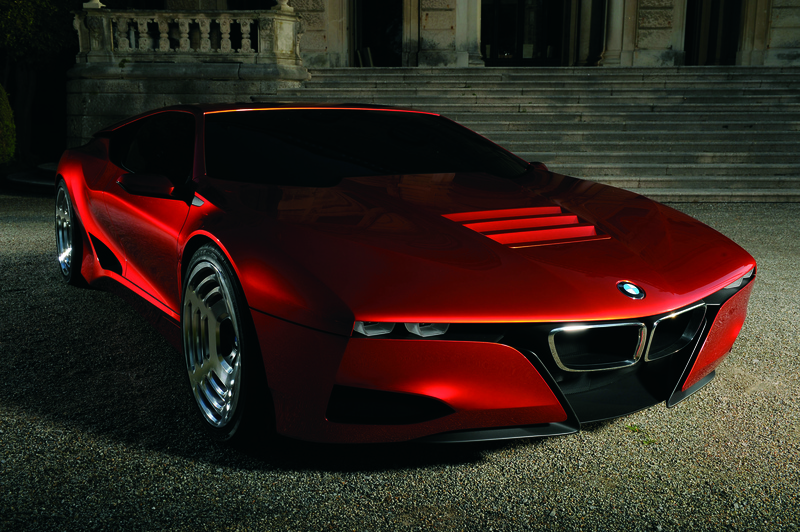
twin badges. Other specific styling cues taken from the BMW M1 are the
air vents in the bonnet and the louvres on the rear windscreen, as well
as the black cutline dividing the roofline from the rear section of the
body. Overall, the exterior dimensions of the BMW M1 Homage are in
keeping with those of the BMW M1; only the extended wheelbase indicates
a larger passenger cell. Emotional design at the flashpoint between
tradition and modernism. The BMW M1 Homage takes long familiar elements
from the BMW Design repertoire, reinterprets them and couches them in a
new context. Its design brings together past and present, expanding the
observer's perception through new design solutions that find their
expression in typical BMW style. If the contrasting colours were a
dominant design theme for the BMW M1, this contrast is perpetuated in
the BMW M1 Homage through its surface styling. Familiar elements, such
as the trademark proportions, are combined with new and exciting lines,
surfaces and details to create an up-to-date interpretation of the BMW
M1, which remains to this day an extraordinary car. Shunning the
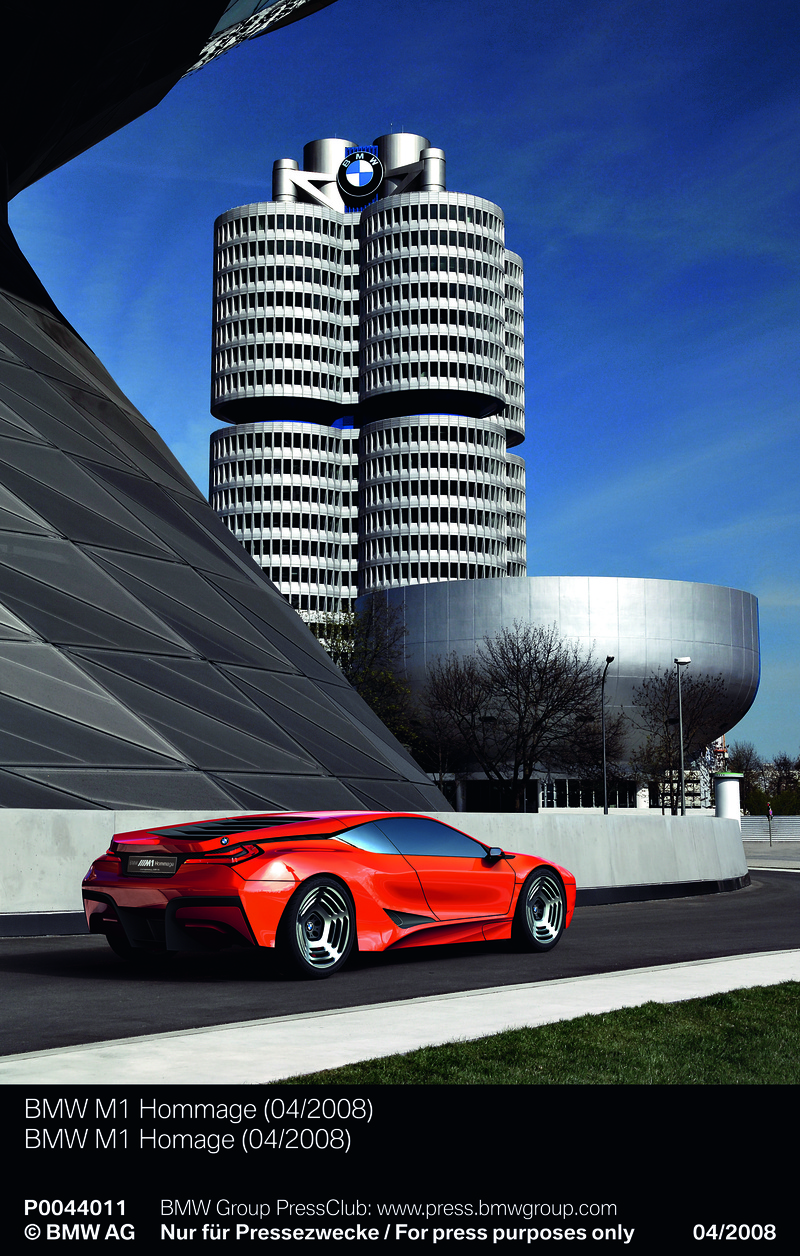
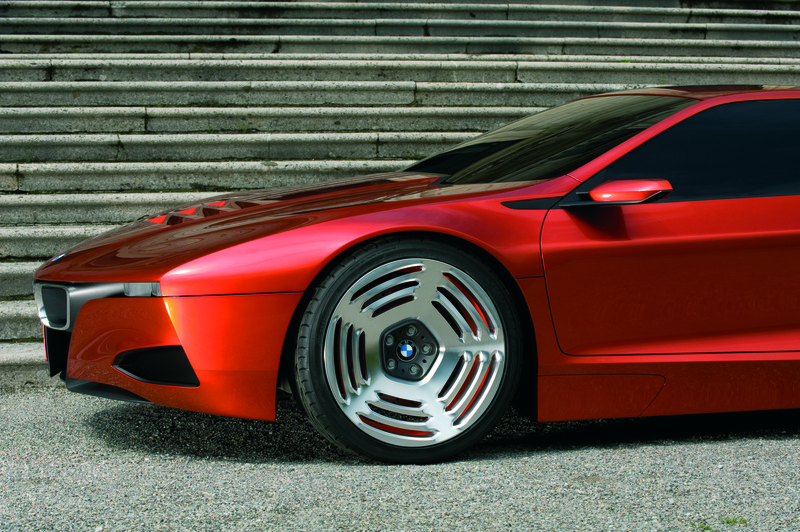
strong wedge shape of other mid-engine cars, the BMW M1 Homage
consciously opts for BMW's characteristic proportions. A relatively long
engine compartment, a clearly defined transition into the A-pillar and
a stretched window line featuring the "Hofmeister" kink
instantly give it away as a bona fide BMW. The horizontal flow of lines
lowers the car's visual centre of gravity and lends it an air of
sovereignty. Though the BMW M1 already boasted extremely harmonious
and sporty proportions, its surface design was not yet an explicit
styling issue and was dominated by high-contrast graphic themes. Today,
however, next to the car's proportions, it is primarily the unusual
surface styling that determines the strong recognition value of a BMW
model. For some years now, all BMW vehicles have exhibited a striking
and unique design language. The sculpting of the surfaces demands
substantial experience and craftsmanship at the highest level. Only
through the combination of craft skills, state-of-the-art technology
and a sure sense of the personality of each BMW can designers and
modellers achieve the overall sculptural effect that lends a BMW its
unique character. The BMW M1 Homage systematically melds the
proportions and graphic themes of the BMW M1 with the surface language
of the new BMW look - a combination that imbues the vehicle with an
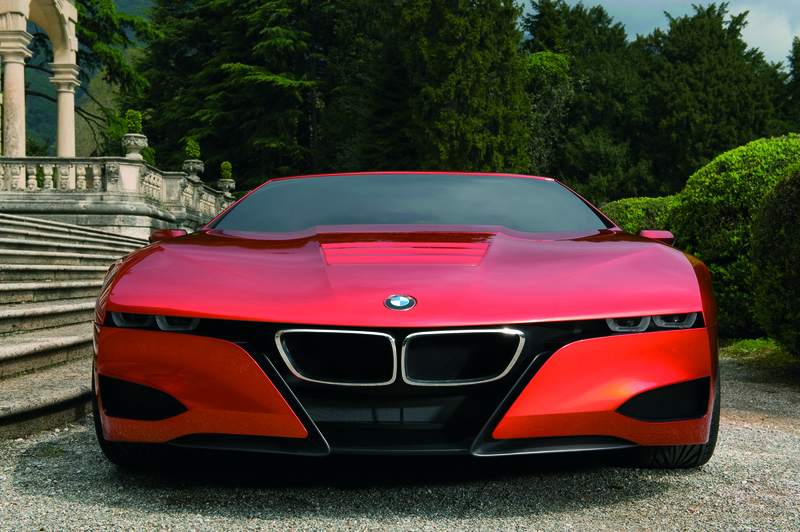
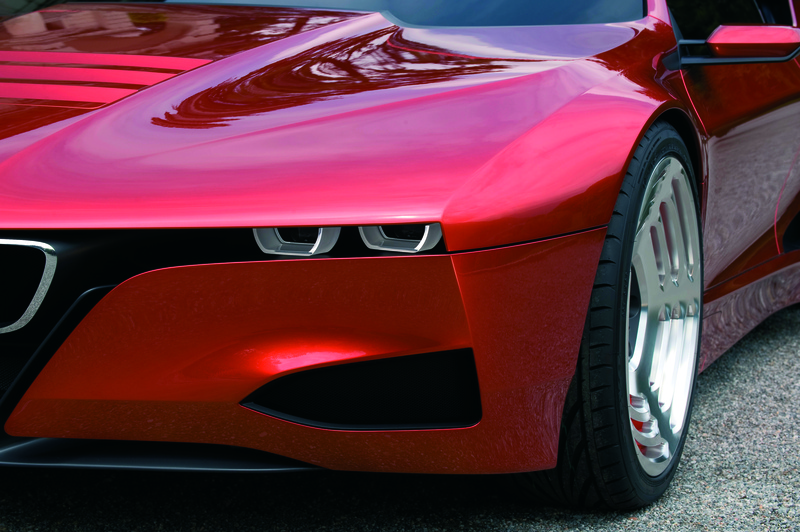
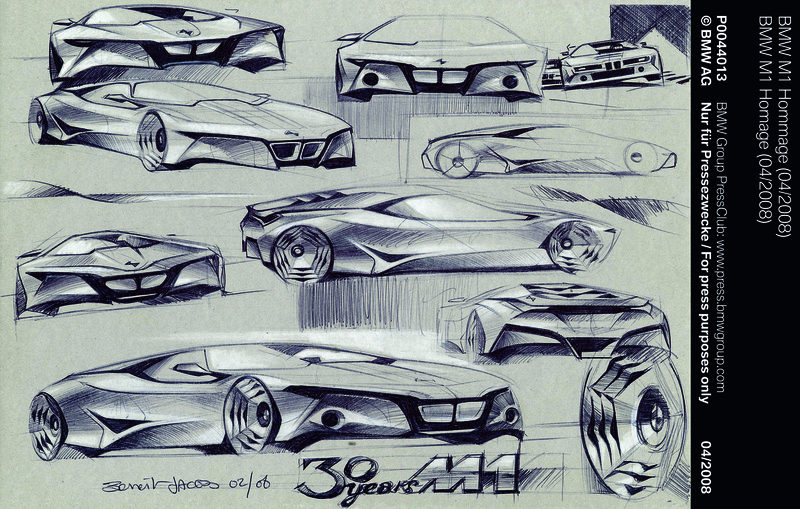
exciting, sporty and authentic emotionality. The front-end styling of
the BMW M1 Homage adopts many of the graphic design themes of the BMW
M1: the contrast between the black, recessed surfaces and the car
colour, the small, squat kidney grille and the "invisible"
headlamps. And yet the front of the BMW M1 Homage is an absolute
novelty for BMW. Each element assumes a function: the hallmark twin
kidney, for example, is not only a distinguishing feature of the BMW
brand but combines aerodynamic, cooling-air routing and safety
solutions. The design of the headlamps, meanwhile, is a new iteration
of the retractable headlights of the BMW M1. Like the lamps on the
historic model, those on the BMW M1 Homage are only visible when
switched on. When not in use they are discreetly integrated into the
front-end design and "disappear" into the recessed black
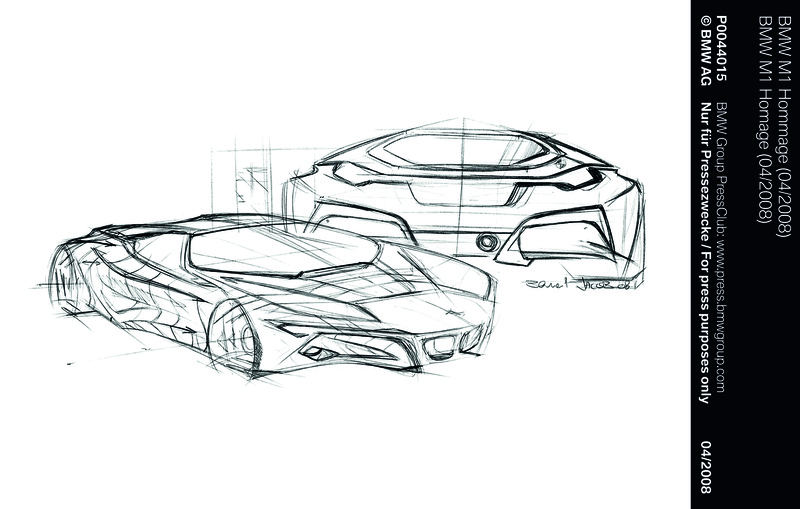
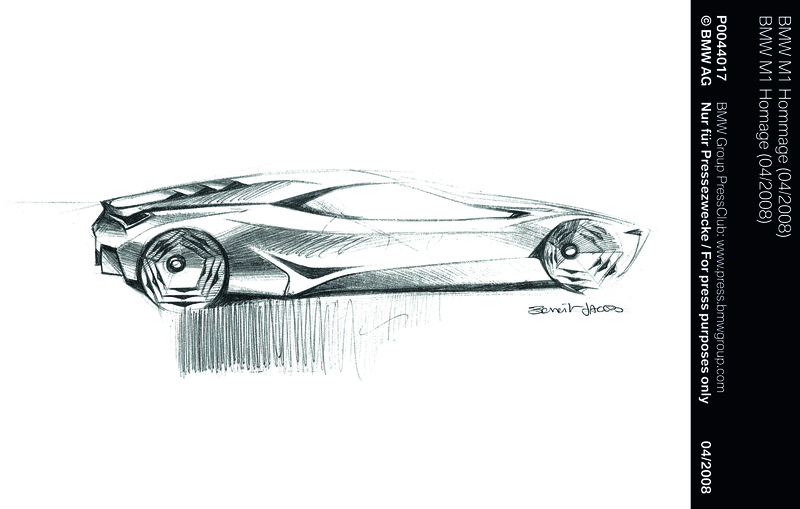
cutline, almost like pop-up headlights. Along the side of the car all
the lines, surfaces and details lead the eye from the front end along
the stretched engine compartment and clearly defined A-pillars before
converging at the centre of the vehicle. Two expressive lines are drawn
from the front along the flanks of the vehicle towards the engine
compartment area. The flow of lines begins in a straight, disciplined
fashion at the front end, lowering the optical centre of gravity of the
BMW M1 Homage and highlighting its low-slung stance. From the middle of
the car, however, the lines break up. The power of the design is
focused precisely where the power of the vehicle also lies - at the
engine. Strong, sensuous sweeping lines accentuate the car's mid-engine
concept, the design emphasising the mechanics behind it, the
engineering skills and the engine expertise of the BMW Group. The
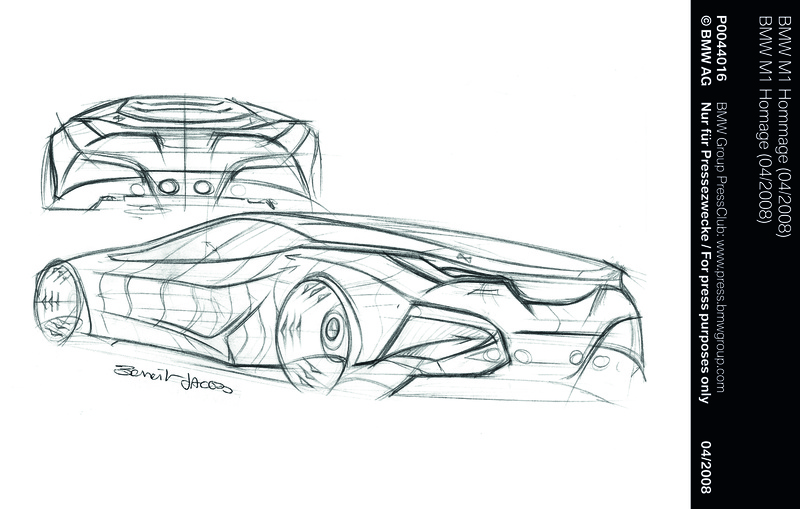
roofline of the BMW M1 Homage is flatly tapered, extending into and
around the rear. In so doing it draws a continuous line and forms a
link between the two sides of the car. It is on this line, above the
tail lights, that the hallmark twin BMW logo can also be found.
"Engineering is beautiful - let's show it!" The overall design
is driven by functionality and each detail has its purpose. Aspects
such as aerodynamics, cooling-air routing and safety lend the BMW M1
Homage technical substance and make it a genuine BMW. A telling symbol
of this is the kidney grille design of the BMW M1 Homage, fulfilling as
it does several functions at the same time. The twin kidney isn't just
a signature BMW feature, it is also part of the car's honed
aerodynamics: it guides the air to the engine cooling as well as
constituting the front section of a crash box, similar to the monocoque
chassis of a Formula One race car. Inspired by aircraft design, the
car as a whole also boasts sophisticated air ducting through the body.
For example, the cooling-air routing for the engine is positioned below
the roofline, in the black recessed cutline along the side of the
vehicle behind the window graphic. Small flaps and openings guide the
air stream into the engine compartment to ensure an adequate supply of
cooling air. Vision and inspiration. "The BMW M1 Homage clearly
manifests the creativity and potential of the BMW Design team. A
project such as this is a valuable source of inspiration for our
day-to-day work." Adrian van Hooydonk, Director Design BMW
Automobiles The BMW M1 Homage holds great significance for the BMW
Group Design team, its genesis epitomising both a living tradition and
an innovative future. This vehicle is designed as a source of
inspiration; it sets out to challenge us to question and rethink what
we see around us. The BMW M1 Homage pays eloquent tribute to the BMW
Turbo and the BMW M1, which in their design were well ahead of their
time. Originally slated as "merely" a design study or small
series, their influence remains very palpable today - 30 years on.
Pictures are available at https://newsroom.bmwgroup.com/global/en
Tel: +351-21-487-3080
endereço de e-mail: joao.trincheiras@bmw.pt